Banjari MP Tours LogoBanjari MP Tours Private Limited
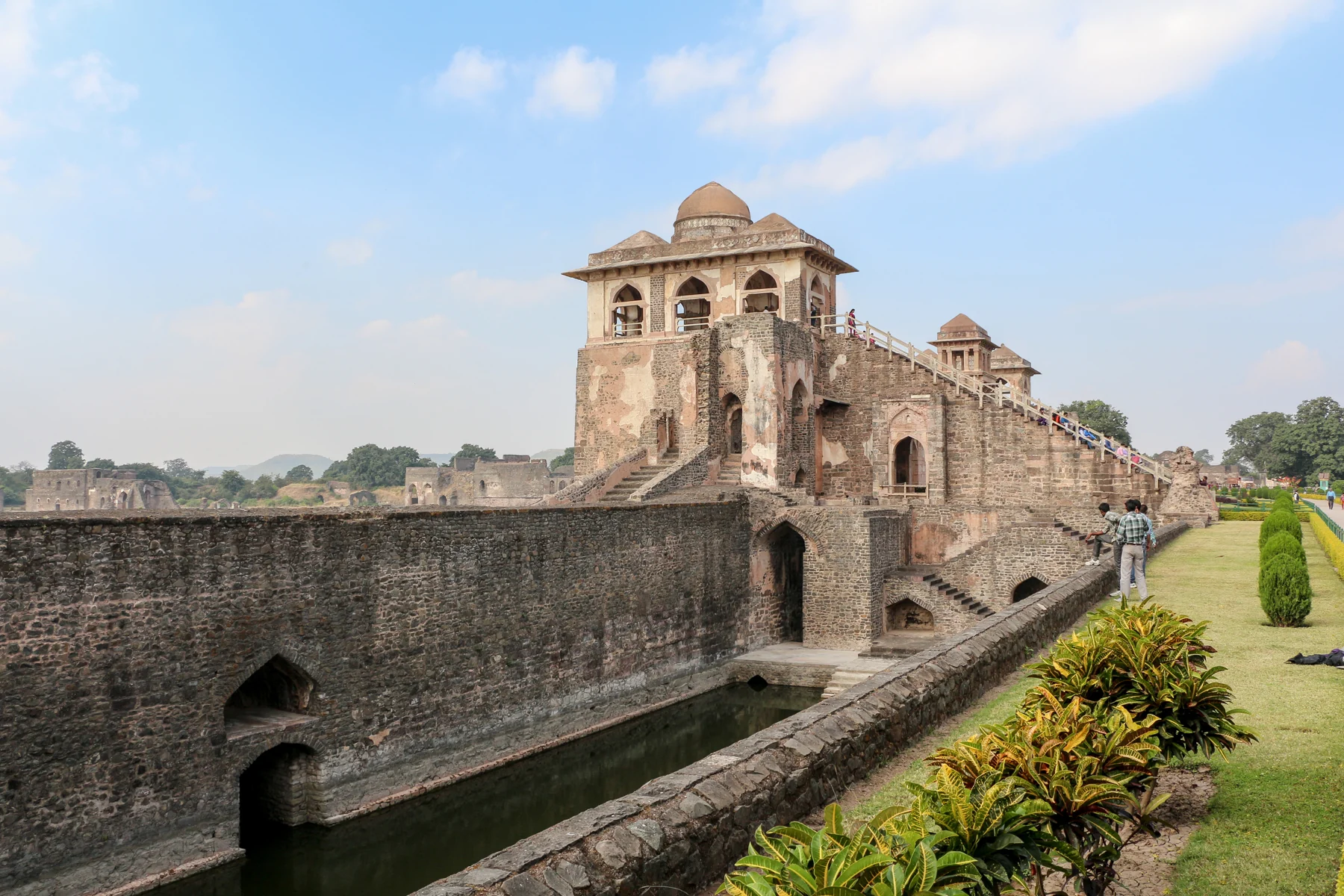
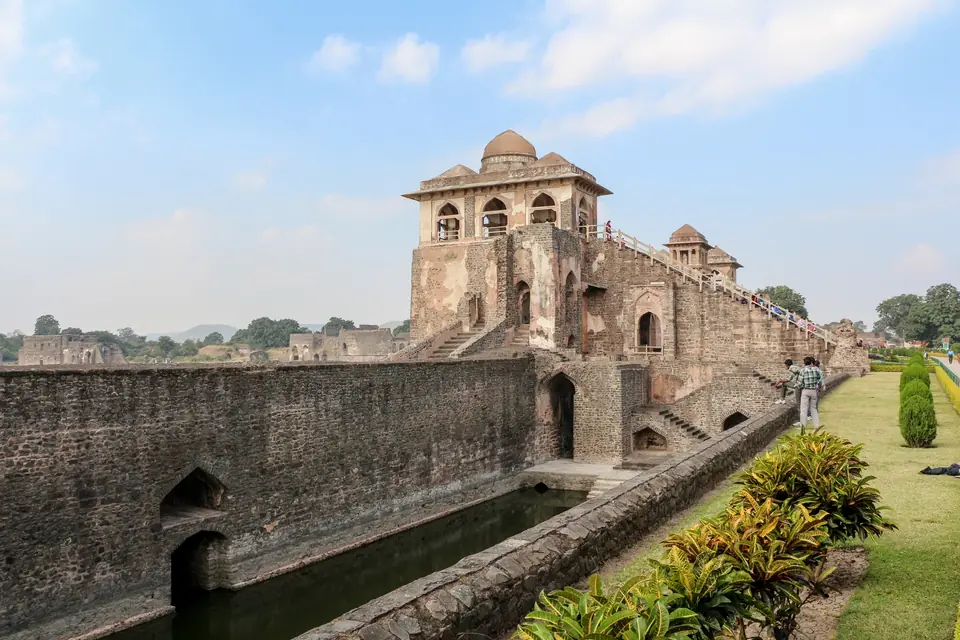
Jahaz Mahal in Mandu, the ship palace between two lakes
MADHYA PRADESH · INDIAA BANJARI TRAVEL GUIDE / 2026

PALACES. WATER. A WORLD ABOVE THE PLAINS.

18 Best Places to Visit inMandu(Palaces, Tombs & Stepwells)

Jahaz Mahal and Hindola Mahal, Jami Masjid, Hoshang Shah's Tomb, Baz Bahadur's Palace, Roopmati Pavilion and the stepwells, with the time each place needs and how to get there. Step inside real photographs of Jahaz Mahal on the way.

  • 18 places
  • Hill fort city at 633 m
  • Dhar district, MP
PALACES & PAVILIONSWATER & STONEHILLTOP VIEWS
Actual photograph · Bernard Gagnon · GFDL CC BY-SA 3.0 ↗
YOUR MANDU TRAVEL GUIDE

Mandu travel guide:
start at Jahaz Mahal.

Mandu, also called Mandav, is a fort city on a plateau of the Vindhya hills in Dhar district, about 100 km from Indore. A wall of about 37 km with 12 main gateways surrounds palaces, mosques, tombs and stepwells built mostly by the Sultans of Malwa in the 15th and 16th centuries. Mandu is also remembered for the love story of Baz Bahadur and Rani Roopmati.

The best places to visit in Mandu begin with Jahaz Mahal, Hindola Mahal, Jami Masjid and Roopmati Pavilion. Between them, stepwells, bathhouses, palace courtyards and quieter monuments reveal how much there is to discover.

This guide includes 18 individual sights across Mandu. Several belong to the same monument group. They are choices for your day, rather than a checklist to rush through in one visit.

Explore the Royal Enclave, continue to the Central Group, and leave room for the Southern Group’s palace, reservoir and hilltop views. Use the suggested itineraries to put your favourite places together. For a ready plan with stay and car, see our Mandu tour packages.

AIRPORTIndore · IDR
RAIL ARRIVALIndore + onward road transfer
GETTING AROUNDDrive between. Walk within.
THE QUICK LIST

The 18 places to visit in Mandu

Here are all 18 in the order of the road below, with the area, the time each place needs and how you get there. Tap a name to jump to its photo and details.

  1. Arriving in ManduDelhi Darwaza 15–20 minutesOn the northern approach; stop only where parking and walking are permitted.
  2. The Royal EnclaveJahaz Mahal 45–75 minutesWithin the Royal Enclave; leave the car at permitted parking and continue on foot.
  3. The Royal EnclaveHindola Mahal 25–40 minutesCombine with Jahaz Mahal in the Royal Enclave.
  4. The Royal EnclaveTaveli Mahal 15–25 minutesWithin the same Royal Enclave outing.
  5. The Royal EnclaveChampa Baoli 15–25 minutesPart of the Royal Enclave circuit.
  6. The Royal EnclaveRoyal Hammam 15–25 minutesNear Champa Baoli within the Royal Enclave.
  7. Water & lesser-known heritageGada Shah’s Shop 20–30 minutesPlan a short local transfer or walk according to the route available.
  8. Water & lesser-known heritageUjali Baoli 15–25 minutesCombine with the nearby Gada Shah area when access allows.
  9. The Central GroupJami Masjid 35–50 minutesIn the Central Group; combine with Hoshang Shah’s Tomb and Ashrafi Mahal.
  10. The Central GroupHoshang Shah’s Tomb 25–40 minutesVisit as part of the Central Group.
  11. The Central GroupAshrafi Mahal 20–30 minutesAcross from Jami Masjid; include in the same central outing.
  12. The Southern GroupBaz Bahadur’s Palace 35–50 minutesIn the Southern Group; allow a car transfer from the Royal Enclave.
  13. The Southern GroupRewa Kund 15–25 minutesNear Baz Bahadur’s Palace; combine the visits.
  14. The Southern GroupRoopmati Pavilion 35–60 minutesA separate approach within the Southern Group; expect a climb and steps.
  15. Quieter ManduDarya Khan’s Tomb 20–30 minutesA local stop between the main sightseeing groups.
  16. Quieter ManduDai Ka Mahal 15–25 minutesCombine with the nearby tomb monuments when practical.
  17. Quieter ManduNilkanth Mahadev & Mahal 30–45 minutesAllow time for the approach and steps.
  18. Quieter ManduLohani Caves 20–35 minutesUse the permitted local approach; confirm access in wet weather.
BEFORE YOU GO

Mandu at a glance

  • WhereDhar district, Madhya Pradesh, about 35 km from Dhar and 100 km from Indore
  • AltitudeAbout 633 m, on a plateau of the Vindhya range
  • Fort wallsAbout 37 km of walls with 12 main gateways, such as Delhi Darwaza
  • Jahaz MahalThe ship palace between two lakes, linked with Sultan Ghiyath Shah (ruled from 1469)
  • Baz Bahadur and RoopmatiRoopmati Pavilion looks out over the Nimar plains towards the Narmada
  • AirportDevi Ahilyabai Holkar Airport, Indore, about 100 km away
  • RailwayIndore station (about 99 km); Ratlam is the main-line railhead
  • Best seasonJuly to March; the monsoon brings green hills and full tanks
18 REAL PLACES↓ SCROLL DOWN · EXPLORE AT YOUR PACE
↓ SCROLL DOWN · EXPLORE BOTH SIDES01–02 / 18
Arriving in Mandu01 / 18
Sagar khadse48 · CC BY-SA 4.0 ↗
FORTIFIED GATEWAY

01. Delhi Darwaza

दिल्ली दरवाज़ा

About this place +

Delhi Darwaza introduces Mandu as a fortified hilltop settlement. The gateway is a useful first pause before the palaces, water structures and monuments spread across the plateau.

Suggested time
15–20 minutes
Getting there
On the northern approach; stop only where parking and walking are permitted.

Look at the arch, thick masonry and the way the entrance is fitted into the fortifications.

Keep clear of the traffic route through the historic gateways.

The Royal Enclave02 / 18
Bernard Gagnon · GFDL CC BY-SA 3.0 ↗
THE SHIP PALACE

02. Jahaz Mahal

जहाज़ महल

About this place +

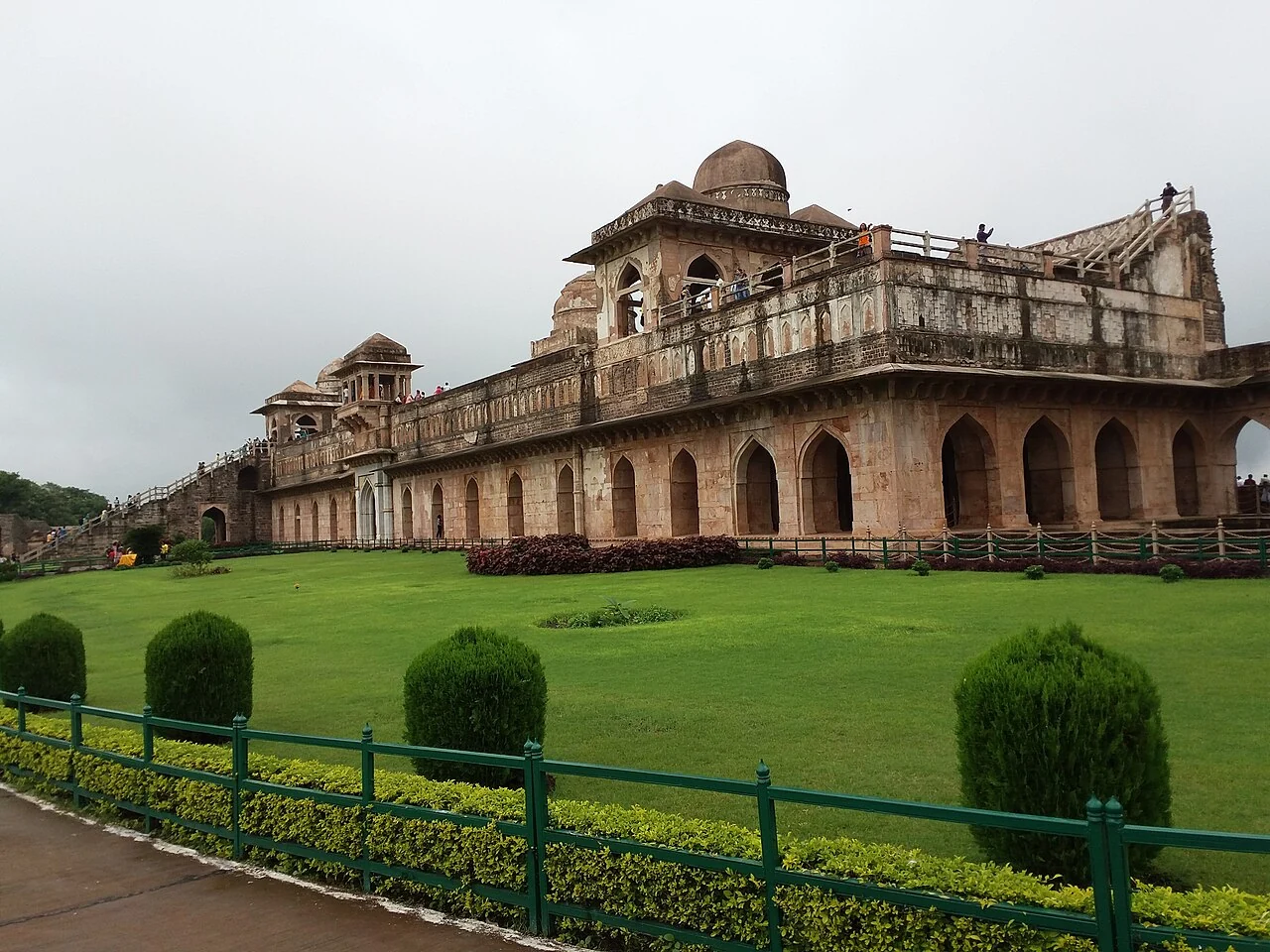
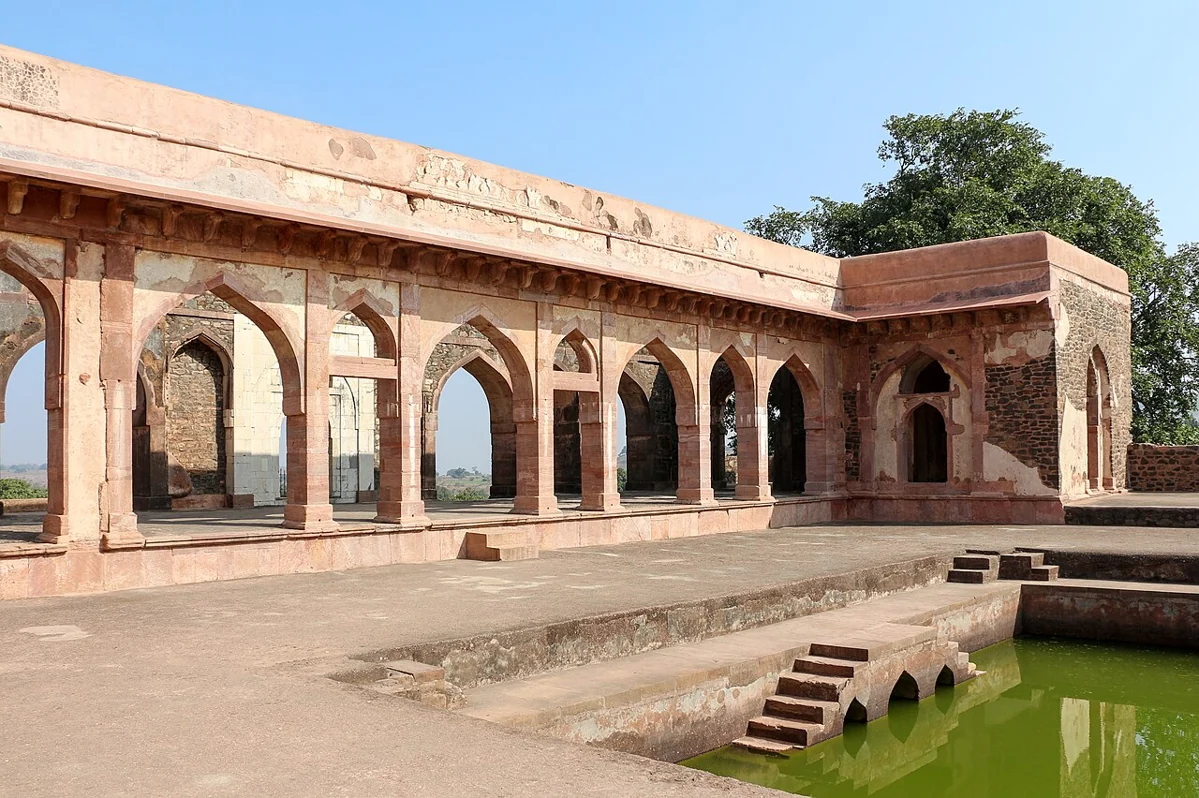
Jahaz Mahal stands between Munj Talao and Kapur Talao. Its long form, open terraces and waterside setting give the palace its ship-like character and make it the centrepiece of a Mandu visit.

Suggested time
45–75 minutes
Getting there
Within the Royal Enclave; leave the car at permitted parking and continue on foot.

Read the long facade first, then look for the arcades, pavilions and water features.

Water levels change with the season. The photo walkthrough below introduces the actual palace architecture.

JAHAZ MAHAL / THE ROYAL ENCLAVEEnter here. Or keep going. ↓
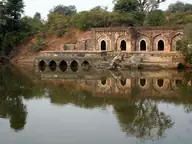
Jahaz Mahal in Mandu, its long original palace facade and lakeside setting
JAHAZ MAHAL / MANDU
Keep exploring ↓
Bernard Gagnon · GFDL CC BY-SA 3.0 ↗
STAY ON THE ROAD↓Scroll to the next places
↓ SCROLL DOWN · EXPLORE BOTH SIDES03–18 / 18
The Royal Enclave03 / 18
Shrikrishna gokhale · CC BY-SA 4.0 ↗
SLOPING WALLS & ARCHES

03. Hindola Mahal

हिंडोला महल

About this place +

Hindola Mahal is known as the swinging palace because of its strongly sloping outer walls. Inside, the surviving arches and the scale of the hall give the building a very different presence from Jahaz Mahal.

Suggested time
25–40 minutes
Getting there
Combine with Jahaz Mahal in the Royal Enclave.

Compare the outward profile of the walls with the tall interior arches.

Walk around the building before moving into the permitted interior areas.

The Royal Enclave04 / 18
Bernard Gagnon · GFDL CC BY-SA 3.0 ↗
PALACE-COMPLEX BUILDING

04. Taveli Mahal

तवेली महल

About this place +

Taveli Mahal is another building in the Royal Enclave near Jahaz Mahal. Add it as an architecture stop while exploring the group, with any museum or interior access checked on the day.

Suggested time
15–25 minutes
Getting there
Within the same Royal Enclave outing.

Look at the facade and its position within the wider group of palace buildings.

Do not assume that museum rooms or upper levels are open without local confirmation.

The Royal Enclave05 / 18
McKay Savage from London, UK · CC BY 2.0 ↗
WELL & UNDERGROUND SPACES

05. Champa Baoli

चंपा बावड़ी

About this place +

Champa Baoli brings Mandu’s water architecture into focus. The well and associated underground spaces are a reminder that the royal buildings were designed around water, shade and the climate.

Suggested time
15–25 minutes
Getting there
Part of the Royal Enclave circuit.

Notice the well opening and the stonework that leads towards the lower levels.

Use only the permitted paths; do not descend into restricted or dark passages.

The Royal Enclave06 / 18
Vinat · CC BY-SA 4.0 ↗
HISTORIC BATHHOUSE

06. Royal Hammam

शाही हमाम

About this place +

The hammam adds another part of royal daily life to the palace circuit. Its enclosed rooms, domes and openings feel very different from the open terraces beside the lakes.

Suggested time
15–25 minutes
Getting there
Near Champa Baoli within the Royal Enclave.

Look at the small openings and the way light enters the surviving spaces.

Let your eyes adjust in dim areas and follow the marked visitor route.

Water & lesser-known heritage07 / 18
Gada Shah's Shop in Mandu 02.jpg : KishanGupta derivative work: Hic et nunc · CC BY-SA 3.0 ↗
MONUMENTAL HALL RUINS

07. Gada Shah’s Shop

गदा शाह की दुकान

About this place +

The building traditionally called Gada Shah’s Shop is a substantial ruin, with a scale that surprises many visitors. It is a worthwhile architectural stop beyond the best-known palace views.

Suggested time
20–30 minutes
Getting there
Plan a short local transfer or walk according to the route available.

Step back to see the height of the surviving walls and the large openings.

Treat the traditional name as the site name; it does not make every modern story about its use certain.

Water & lesser-known heritage08 / 18
Sharvarism · CC BY-SA 4.0 ↗
STEPWELL & STONE GEOMETRY

08. Ujali Baoli

उजली बावड़ी

About this place +

Ujali Baoli offers a closer look at a stepwell rather than a palace. Its steps, openings and masonry make an interesting contrast to Mandu’s broad tanks and royal water features.

Suggested time
15–25 minutes
Getting there
Combine with the nearby Gada Shah area when access allows.

Follow the repeated lines of the steps and the changing depth of the well.

Stay on permitted edges and steps; water and surface conditions vary.

The Central Group09 / 18
Zishaan · CC BY-SA 3.0 ↗
COURTYARD & DOMED ARCADES

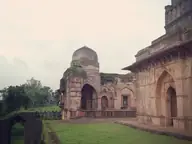
09. Jami Masjid

जामी मस्जिद

About this place +

Jami Masjid is one of Mandu’s major central monuments. The broad courtyard, domed prayer spaces and rows of arches create a strong sense of scale and repetition.

Suggested time
35–50 minutes
Getting there
In the Central Group; combine with Hoshang Shah’s Tomb and Ashrafi Mahal.

Pause in the courtyard, then follow the rhythm of the arches towards the shaded spaces.

Follow the site’s instructions for dress, footwear and photography.

The Central Group10 / 18
Shivani Choudhary1626 · CC BY-SA 4.0 ↗
MARBLE TOMB & DOME

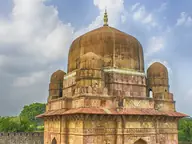
10. Hoshang Shah’s Tomb

होशंग शाह का मकबरा

About this place +

Hoshang Shah’s Tomb brings pale marble and a carefully balanced dome into Mandu’s architectural mix. It is a quieter complement to the large courtyard of the nearby Jami Masjid.

Suggested time
25–40 minutes
Getting there
Visit as part of the Central Group.

Notice the proportions of the dome, the carved screens and the enclosing court.

Take time to see the exterior as well as any spaces open to visitors.

The Central Group11 / 18
Bernard Gagnon · CC BY-SA 3.0 ↗
MADRASA & TOMB RUINS

11. Ashrafi Mahal

अशरफी महल

About this place +

Ashrafi Mahal stands opposite Jami Masjid. Its surviving remains tell a more fragmentary story: an academic complex, later additions and buildings that have not survived intact.

Suggested time
20–30 minutes
Getting there
Across from Jami Masjid; include in the same central outing.

Read the steps, platforms and remaining masonry as parts of a larger former complex.

Use the information boards to distinguish the different remains.

The Southern Group12 / 18
Bernard Gagnon · GFDL CC BY-SA 3.0 ↗
COURTYARD PALACE

12. Baz Bahadur’s Palace

बाज़ बहादुर का महल

About this place +

Baz Bahadur’s Palace is associated with Mandu’s stories of music and Roopmati. Its courtyard and surrounding halls make a rewarding stop before or after the nearby Rewa Kund.

Suggested time
35–50 minutes
Getting there
In the Southern Group; allow a car transfer from the Royal Enclave.

Look from the open court into the arcades and towards the surrounding landscape.

Leave time for the approach and steps instead of planning only a drive-by view.

The Southern Group13 / 18
Ramesh Lalwani from New Delhi, India · CC BY 2.0 ↗
RESERVOIR & LOCAL TRADITIONS

13. Rewa Kund

रेवा कुंड

About this place +

Rewa Kund is closely associated with the stories of Baz Bahadur and Roopmati. The reservoir adds a quieter water-side stop to the southern palace and pavilion circuit.

Suggested time
15–25 minutes
Getting there
Near Baz Bahadur’s Palace; combine the visits.

See the reservoir in relation to its stone edges, steps and the surrounding buildings.

Respect the local religious significance and avoid entering the water.

The Southern Group14 / 18
Yashasvi nagda · CC BY-SA 3.0 ↗
HILLTOP PAVILIONS & VIEWS

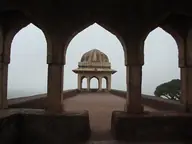
14. Roopmati Pavilion

रूपमती मंडप

About this place +

Roopmati Pavilion sits high above the surrounding plains and is closely connected with Mandu’s best-known love story. Its pavilions and open views make the hilltop setting as memorable as the masonry.

Suggested time
35–60 minutes
Getting there
A separate approach within the Southern Group; expect a climb and steps.

Look at the skyline of the pavilions, then enjoy the views from permitted areas.

Choose visibility and comfortable walking conditions over a fixed sunset promise.

Quieter Mandu15 / 18
Sagar khadse48 · CC BY-SA 4.0 ↗
DOMED TOMB COMPLEX

15. Darya Khan’s Tomb

दरिया खान का मकबरा

About this place +

Darya Khan’s Tomb offers a quieter monument visit away from the busiest palace stops. The domed form and surviving buildings give another view of Mandu’s funerary architecture.

Suggested time
20–30 minutes
Getting there
A local stop between the main sightseeing groups.

Notice the proportions of the main tomb and the spaces around it.

Ask for the current access route and stay within the visitor area.

Quieter Mandu16 / 18
Zishaan · CC BY-SA 3.0 ↗
TOMB ARCHITECTURE

16. Dai Ka Mahal

दाई का महल

About this place +

Despite its palace-style name, Dai Ka Mahal is a tomb monument. Its scale and domed form make it a useful contrast with the larger central tomb complex.

Suggested time
15–25 minutes
Getting there
Combine with the nearby tomb monuments when practical.

Look at the relationship between the main dome, walls and the surrounding open space.

Follow the local site signs so it is not confused with similarly named monuments nearby.

Quieter Mandu17 / 18
Djurassic · CC BY-SA 4.0 ↗
SHRINE & HISTORIC SETTING

17. Nilkanth Mahadev & Mahal

नीलकंठ महादेव और महल

About this place +

Nilkanth combines a Shiva shrine with a historic palace setting. Its more secluded position offers a different atmosphere from the grand public halls and open palace terraces.

Suggested time
30–45 minutes
Getting there
Allow time for the approach and steps.

Notice how the shrine, masonry and landscape sit together.

Follow worship, footwear and photography instructions at the shrine.

Quieter Mandu18 / 18
Hitarth · CC BY-SA 3.0 ↗
ROCK-CUT HERITAGE

18. Lohani Caves

लोहानी गुफाएँ

About this place +

The Lohani Caves show another side of Mandu beyond its celebrated palaces. The small rock-cut spaces invite a closer look at the cliff and the surviving carved details.

Suggested time
20–35 minutes
Getting there
Use the permitted local approach; confirm access in wet weather.

Read the openings and the natural rock together rather than expecting a large cave hall.

Keep away from cliff edges and unmarked routes.

THE STORY OF THE CITY

History of Mandu

Mandu was a hill fort of the Paramaras, then for more than a century the capital of the Sultans of Malwa, who filled the plateau with palaces, tombs and water works.

  1. 10th to 11th centuryThe Paramara kings use the Mandu hills as a fortified capital.
  2. 1401After Timur takes Delhi, Dilawar Khan, governor of Malwa, sets up his own kingdom. His son Hoshang Shah moves the capital from Dhar to Mandu.
  3. 1436 to 1531The Khalji Sultans of Malwa rule from Mandu. Ghiyath Shah, who rules for 31 years from 1469, is linked with Jahaz Mahal.
  4. 1550sBaz Bahadur rules Malwa from Mandu. His love for the singer Roopmati becomes Mandu's best-known story.
  5. 1561Akbar's army defeats Baz Bahadur, and Mandu comes under Mughal rule.
  6. 1732Peshwa Baji Rao I takes Mandu, and the Marathas later move the capital of Malwa back to Dhar.
  7. TodayA quiet plateau of ruins, lakes and baobab trees. The Mandu Festival is held at Jahaz Mahal in winter.
Baz Bahadur's Palace in Mandu
Baz Bahadur’s Palace · Bernard Gagnon · GFDL CC BY-SA 3.0 ↗
PLAN THE GROUPS, NOT A RUSH

Mandu itinerary:
1, 2 or 3 days.

Choose the monuments that interest you and leave time for the approach, shade, a meal and the view.

01 / ONE FULL DAY

The Mandu essentials

  1. Morning: Begin at Jahaz Mahal and Hindola Mahal. Add one water-heritage stop in the Royal Enclave if time allows.
  2. Afternoon: After lunch, choose Jami Masjid and Hoshang Shah’s Tomb in the Central Group.
  3. Later: Continue to the Southern Group for selected Baz Bahadur Palace, Rewa Kund and Roopmati Pavilion visits, allowing for entry hours.

A full day works best with selected highlights and an early start. It does not require all 18 stops.

03 / THREE DAYS

Stay a little longer

  1. Days 1–2: Follow the relaxed Mandu plan, with room for the smaller monuments.
  2. Day 3: Return to a favourite palace in different light, or discuss a separate Maheshwar or Dhar outing.
  3. Keep it realistic: Any regional excursion has its own driving time and is outside the 18 Mandu sights listed here.

Choose an extra day for the experience you want, with current travel arrangements confirmed first.

These are editorial planning suggestions. Visit lengths are estimates; your arrival time, interests, weather and current entry arrangements shape the final itinerary.

Ready-made plans with stay and car: 1 night Mandu · 2 nights Mandu · Indore with Mandu · Ujjain, Omkareshwar, Mandu and Indore.

BEFORE YOU SET OUT

Mandu travel tips:
best time, how to reach, tickets.

Put walking time, weather and the different monument groups into the same plan.

01

Best time to visit Mandu

MP Tourism highlights July to March as Mandu’s broad visiting window. Monsoon brings greener scenery; the cooler months are a good choice for longer monument walks.

Water levels and mist vary. In rain, check local conditions and take extra care on wet stone. In hotter months, start early and keep a midday break.

Official destination guide ↗
02

How to reach Mandu

By air: Devi Ahilyabai Holkar Airport in Indore (IDR) is the main airport option, followed by a road transfer.

By rail: Indore is a practical major arrival city. Ratlam is another rail option to discuss around your actual train connection.

By road: Plan the onward drive via the suitable Indore/Dhar route for your arrival point. Check current connections and road conditions.

Distances: Indore is about 100 km and Dhar about 35 km from Mandu. Indore has the nearest airport and a railway station; Ratlam is the main-line railhead. Maheshwar and Omkareshwar are often added to a Mandu trip on the way to or from Indore.

03

Tickets, timings & guides

Mandu’s monument groups can have separate tickets and access arrangements. Confirm current opening times, inclusions and photography rules before setting your day’s order.

If you want an evening show, confirm its current operation, timing, language and ticket separately. A show is not assumed to be running or included.

Agree the guide’s language, duration and fee before the visit.

04

Driving & walking

Use a tourist car or SUV between the sightseeing groups. Continue on foot inside the monument precincts and where vehicles are restricted.

Allow for steps, slopes, uneven paving and the climb to some viewpoints. Share mobility needs before finalising the plan.

05

What to carry

Bring water, sun protection and comfortable shoes with good grip. A light rain layer is useful during the monsoon.

Pack lightly for the walks. Follow local footwear and dress instructions at shrines and religious monuments, and leave space for a meal break.

06

Photography & care

Use permitted paths and viewpoints. Follow photography rules, ask before photographing people and avoid blocking narrow passages.

Keep off original stonework, pool edges and barriers. Water structures and unlit chambers are heritage features, not invitations to climb or enter.

MAKE THE TRIP YOUR OWN

Places to visit near Mandu:
Maheshwar, Dhar and Indore.

The 18 places above are Mandu sights. Maheshwar or Dhar can be discussed as separate regional outings, with their own travel time.

More guides: Indore tour packages · Omkareshwar tour packages · Ujjain tour packages.

A Mandu photography day

Choose a few palaces and water features, then leave time to return in different light. The season changes the scenery; no reflection or sunset is guaranteed.

Return to Jahaz Mahal ↓

Car, stay & guide options

Share your arrival city, group size and preferred pace. Ask for a practical route and a clear quote for the services you want.

Ask for a Mandu plan ↓
YOUR QUESTIONS, ANSWERED

Mandu FAQs
before you visit.

A few practical answers before the trip.

What are the best places to visit in Mandu?

Begin with Jahaz Mahal and Hindola Mahal, then choose Jami Masjid, Hoshang Shah’s Tomb, Ashrafi Mahal, Baz Bahadur’s Palace, Rewa Kund and Roopmati Pavilion. Add the stepwells, hammam and quieter monuments if you have more time.

Why is Mandu famous?

Mandu is famous for its 15th and 16th century palaces, mosques and tombs built by the Sultans of Malwa, such as Jahaz Mahal, Hindola Mahal, Jami Masjid and Hoshang Shah's Tomb, and for the story of Baz Bahadur and Rani Roopmati. The whole plateau is ringed by about 37 km of fort walls.

What is the story of Baz Bahadur and Rani Roopmati?

Baz Bahadur was the last independent ruler of Malwa in the 1550s. He loved Roopmati, a singer, and the pavilion named after her looks out towards the Narmada. When Akbar's army took Mandu in 1561, Baz Bahadur fled, and the story of the two became Mandu's most famous legend.

How far is Mandu from Indore?

Mandu is about 100 km from Indore by road, usually a drive of a few hours, and about 35 km from Dhar. Indore has the nearest airport and a railway station. Many visitors combine Mandu with Maheshwar, Omkareshwar or Ujjain.

What is Jahaz Mahal?

Jahaz Mahal, the ship palace, is a long two-storey palace built between two lakes, Munj Talao and Kapur Talao, so that it seems to float like a ship. It is linked with Sultan Ghiyath Shah, who ruled from 1469, and is the main stop in Mandu's Royal Enclave.

How many days do I need in Mandu?

One full day can cover a selected Royal Enclave, Central Group and Southern Group circuit. Two days give the buildings, water structures and viewpoints more time. Add another day if you want a separate regional outing.

Are these 18 places all in the same palace?

No. The guide covers separate sights across Mandu. Some are close together within a monument group; others need a local transfer. Individual buildings, stepwells and tombs are listed separately so you can choose a practical route.

When is a good time to visit Mandu?

Monsoon brings green scenery and fuller water bodies, while the cooler months suit longer walks. July to March is the broad visiting window highlighted by MP Tourism. Weather, water levels and visibility vary, so check the forecast and local access.

How does the Jahaz Mahal photo walkthrough work?

Enter from the large palace view. Eight genuine photographs introduce the facade, interior, arches, pools, channels, terrace, pavilion and lake setting. Scroll inside that view or use the controls; it stays in the same palace area.

Can I continue the sightseeing route without entering the palace walkthrough?

Yes. Scroll on the road beside the palace or choose Keep exploring. Outside view restores the main palace photograph in place, and Next places continues at Hindola Mahal.

Is the walkthrough a video, and are all photographed areas open today?

It is a sequence of actual photographs with gentle forward zoom and short dissolves, not continuous footage or a measured 3D route. Access to terraces, rooms and water structures can change; follow current site instructions.

How do tickets and the enquiry form work?

Monument groups, guides and transport are separate arrangements unless included in a written quote. The final form prepares a WhatsApp draft for Banjari MP Tours Private Limited. You review and send it yourself; it does not take payment or confirm a booking.

Sources, photographs & this experience +

Palace information is based on District Dhar, Mandu visitor guide and Madhya Pradesh Tourism. Each place links a visitor reference. Suggested visit lengths are editorial planning estimates. Individual monuments and water structures are listed separately within Mandu.

The monuments, sculptures and destinations are actual photographs. The SUV and tourist couple are photorealistic illustrative animation assets, not documentary footage of a specific trip. The road sequence is an illustrative sightseeing order. Vehicles remain outside protected palace grounds. The optional Jahaz Mahal photo exploration is a sequence of real photographs, not a continuous video or measured 3D scan.

Image source and licence details are included in PHOTO_CREDITS.json. Photographs were resized to WebP with necessary EXIF orientation correction. Scene views can crop; the full image is available in the photo viewer. No generated monument architecture or sculpture is used. The original palace-walkthrough credits are included within that section.

PLAN WITH BANJARI MP TOURS

Let’s plan your
Mandu trip.

Tell us when you are coming, how many people are travelling and what you would like to see. We will help you put the palace visits, car transfers and nearby outings in a sensible order.

Mandu heritage sightseeingCar transfersStay & guide optionsNearby outings

Share your preferences first. Availability, inclusions and the final quote are confirmed before you book.

Call +91 75875 33 222 ↗inquiry@banjarimptours.com

Your trip, at a glance.

Opens a WhatsApp draft with your details. Review and send it when ready. No payment is taken here.

75875 33 222