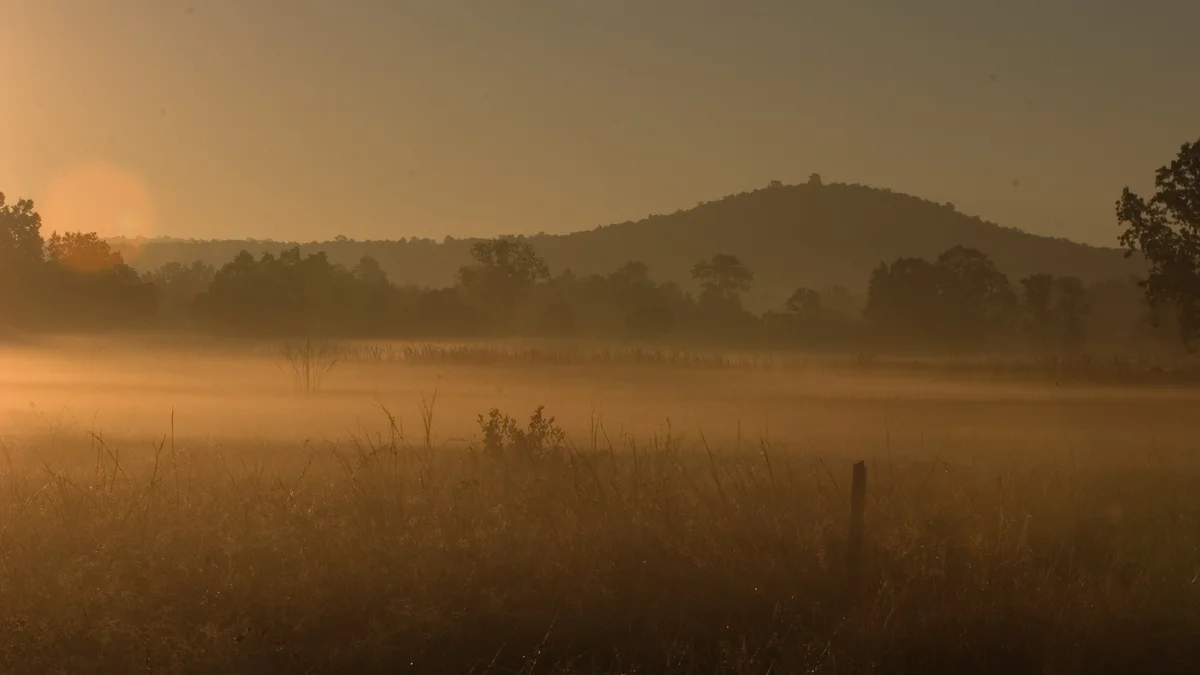
Kanha Meadows are open grasslands inside Kanha Tiger Reserve, explored on a guided vehicle safari in the Kanha core zone. Khatia gate is approx. 160 km from Jabalpur; allow half a day for your safari and choose a morning drive for cool conditions. The meadows are part of a permitted safari route, rather than a separate walk-in attraction.
A good visit begins with the right zone, a lodge near the correct entry gate and time to watch the grasslands quietly. This guide focuses on the meadow experience. For the wider destination, use our Kanha National Park sightseeing guide.
Where are Kanha Meadows, and how do you visit?
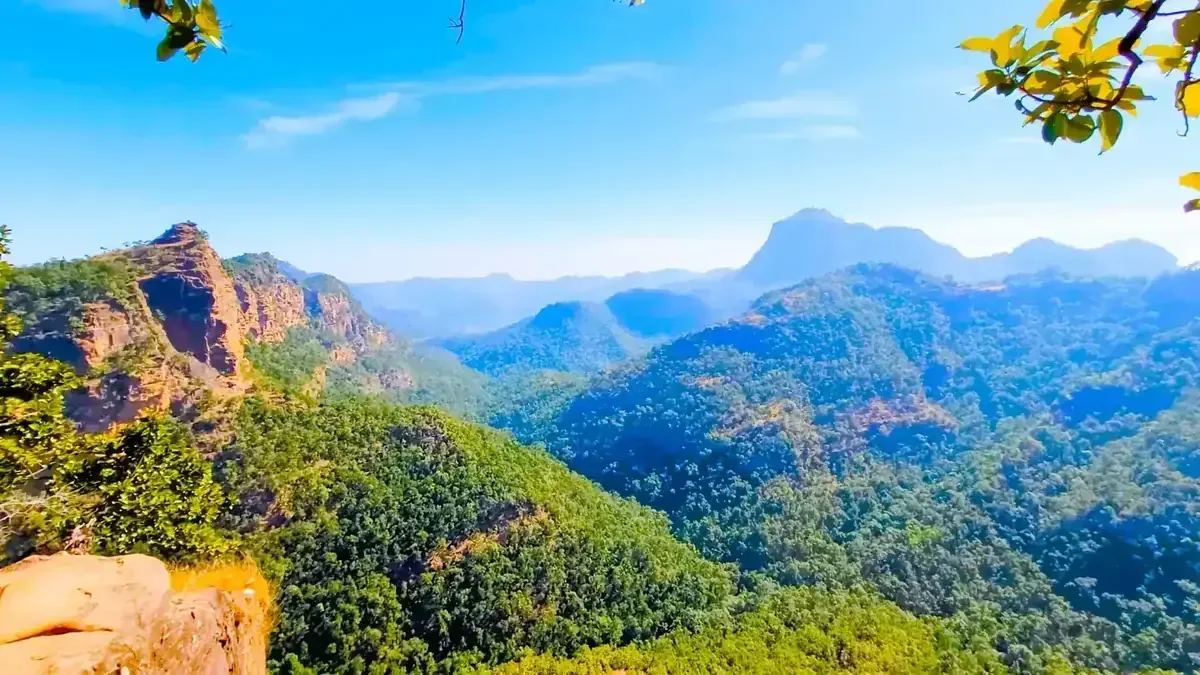
Kanha Meadows form part of the reserve's forest-and-grassland landscape. The reserve's official points of interest page identifies the central meadows, nearby Shravan Tal and other grassland sites. You see them from authorised safari tracks with a park guide, rather than through an independent entry gate for the meadow itself.
Think of a meadow as a place to pause and observe. Look across the open ground, then along the forest edge and around any visible water. A slow scan often reveals more than looking only at the patch beside the vehicle.
Kanha Meadows and Sonf Meadows are related grassland experiences, but they are separate named places. Do not assume that every open clearing on a drive is the central meadow. Ask your guide which landscape you are looking at and let them explain how the route fits together.
Your booking should name the safari zone, entry gate and session. Tell us that these grasslands are your priority before we arrange the stay. That gives the trip a clear purpose without turning the drive into a list of stops that must be ticked off.
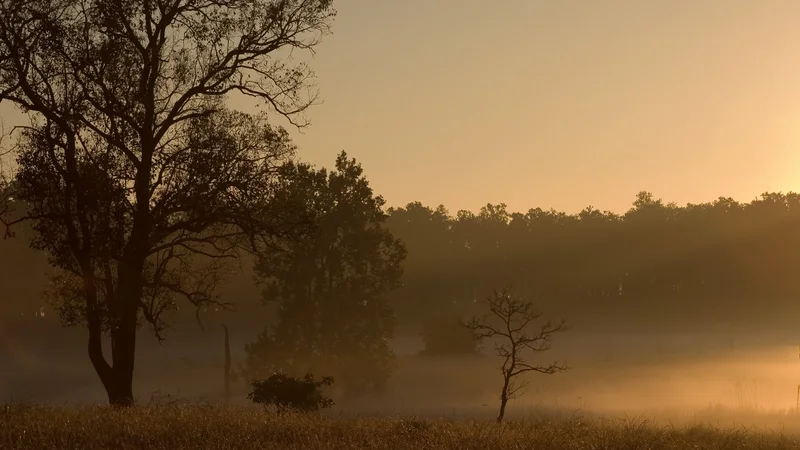
What wildlife can you see in Kanha Meadows?
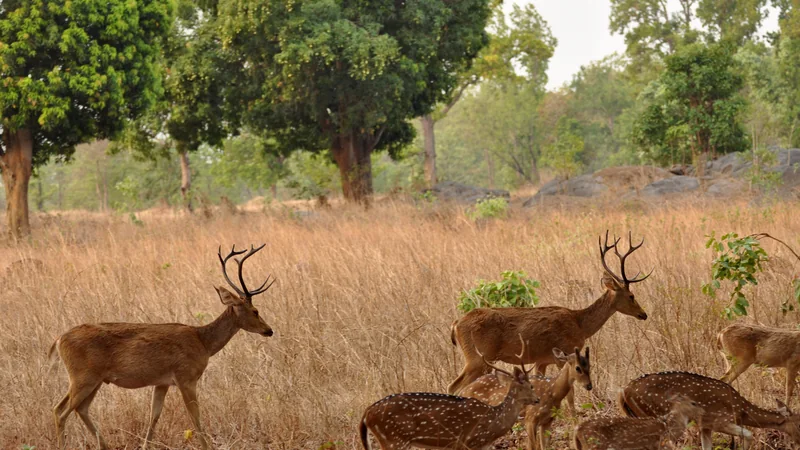
The open ground makes it easier to watch animals feeding, resting and moving between habitats. Kanha Meadows attract grazing deer and larger herbivores, while predators can use the adjoining cover. Wildlife remains free-ranging: a species being present in the reserve never means it will appear during your drive.
Barasingha: the animal worth slowing down for
The hard-ground barasingha is Kanha's distinctive swamp deer. The reserve's barasingha conservation account explains why protecting this animal and its habitat matters. A meadow visit is a chance to understand that conservation story, rather than treating deer as a brief stop before searching for a tiger.
Ask the guide to help identify the animals before naming them in photographs. Barasingha and chital are different deer, even when they share the same landscape. Watch the group for a while: feeding, alert postures and movement can make an ordinary-looking scene interesting.
Chital, gaur and other herbivores
The official meadow description names chital, barasingha, sambar and gaur among the animals that use these areas. Keep binoculars ready for the far side of a clearing. Let the guide decide where the vehicle can stop, so another visitor's view or an animal's movement is not blocked.
Tigers and other predators
A tiger may cross open ground or remain completely hidden in vegetation. Enjoy Kanha Meadows for the whole habitat, including the deer, birds, light and forest edge. No safari zone or package can guarantee a tiger sighting.
Which safari zone and entry gate should you choose?
For Kanha Meadows as the main interest, request the Kanha core zone first. The reserve lists four core tourism zones: Kanha, Kisli, Mukki and Sarhi. A gate is where you enter; a zone is the tourism area covered by your permit.
The official zone and gate table shows that permitted gate combinations also depend on the session. That is why the hotel, gate and permit should be planned together. A lodge beside one entrance does not automatically give access to every zone on every drive.
| Arrival choice | Road distance from Jabalpur | What the figure means |
|---|---|---|
| Khatia gate | Approx. 160 km | Road approach through Mandla |
| Sarhi gate | Approx. 150 km | Road approach through Mandla and Bichhia |
| Mukki gate | Approx. 200 km | Road approach through Mandla, Mocha and Baihar |
| Core tourism zones | 4 zones | Kanha, Kisli, Mukki and Sarhi |
Distances are from the reserve's official road approach guide; they end at the gate, not at the meadow. We have not added a fixed gate-to-meadow distance because the permitted route determines the drive.
Use our Kanha safari permit booking service to match the zone with your arrival plan. If the preferred permit is unavailable, decide whether another zone fits your interests before choosing the hotel.
When is the best season and time of day?
For comfortable wildlife watching, our practical pick is the cooler part of the visitor season, especially November to February. Morning light and cool air suit an unhurried grassland drive. Carry warm layers because an open vehicle feels colder than the lodge garden.
The reserve's season and climate guidance describes a visitor season spanning October to June, with very cold winter conditions and hotter late-summer months. Core tourism closes during the monsoon period. We recommend choosing the season for your comfort and the landscape you want to experience.
Later in the dry season, visitors often concentrate on water and shade. That does not make any particular animal certain to appear. If heat is difficult for someone in your group, a cooler trip with patient viewing can be a better choice than chasing a supposed best month for tigers.
An afternoon drive gives a different light and atmosphere from the morning. With two drives, you can compare both sessions without expecting identical routes or sightings. Our Kanha winter safari guide helps you plan clothing and the rhythm of a cold-weather stay.
How much time should you allow, and what should you carry?
Keep half a day free for a Kanha Meadows safari, including gate formalities and the drive back. This is a planning allowance, not a promise of a fixed time at one clearing. Leave a relaxed gap after the safari before a long road transfer.
The forest booking portal states that vehicle and guide charges are separate from the online permit. Session hours shift with the season and charges change, so we share the current timings and permit cost with your quote; see our Kanha safari booking help. Use the MP Forest Department safari portal for the official booking process.
The reserve's visitor conduct rules require a valid permit, an authorised guide and staying in the vehicle except where allowed. Its published rules also prohibit mobile phone use inside the protected area. Ask about permitted camera equipment before packing for photography.
For children or first-time visitors, give the drive a simple theme: find three different habitats, listen to the guide and compare deer species. This keeps everyone involved even when large animals are out of view. A quiet, attentive group usually gets more from the landscape.
How can you visit Kanha Meadows with Banjari?
We plan the stay, road transfer and safari request around your arrival city and preferred gate. Tell us that Kanha Meadows are the priority, how many drives you want and whether the group prefers a private vehicle or sharing arrangement. We then build the plan around available permits.
A compact forest break
Two nights in Kanha
A short stay from Jabalpur with time for a safari and a relaxed lodge base.
From ₹12,100 per person
Explore the two-night Kanha package from JabalpurMore time for the forest
Three nights in Kanha
A longer stay for more safari time and space between drives.
From ₹18,800 per person
View the three-night Kanha package from JabalpurThe shorter stay suits a first visit with one full safari morning. The longer stay gives more room for a second drive and time at the lodge between excursions. Compare the full Kanha tour package collection if you are adding Jabalpur or another destination.
A sensible sequence is to settle the safari plan first, choose accommodation on the matching side and then arrange the arrival transfer. Before payment, read the written inclusions and the vehicle arrangement. Keep the same traveller details across the permit and the booking documents.
If your visit falls in a busy travel period, start with our tiger safari permit planning guide. Choose a trip for the forest experience as a whole, with the meadows as a highlight and wildlife encounters as an added pleasure.
Cover photo: Kalyan Varma, Wikimedia Commons, CC BY-SA 4.0.