Hero photo Photo romana klee · CC BY-SA 2.0 · cropped and resized
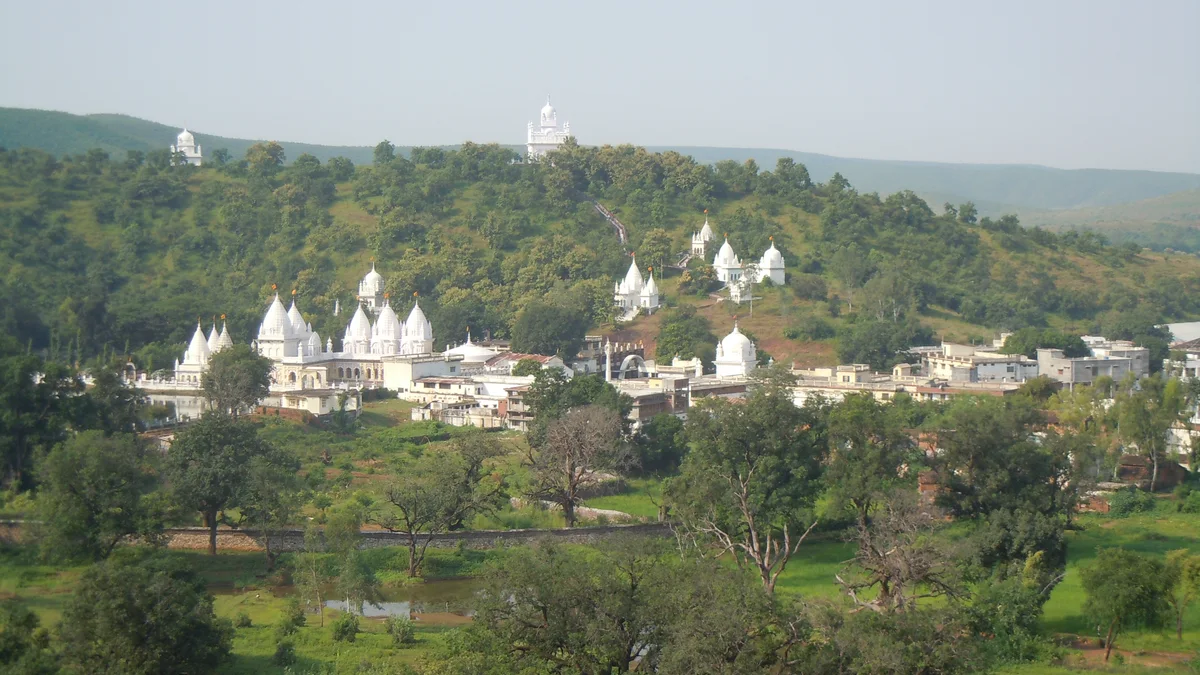
The Sonagiri Jain temple hill in Datia district is about 60–65 km from Gwalior, roughly 1.5 hours by road, and has 103 temples, 77 of them on the hill. The Gopachal rock-cut Jain statues sit on the Gwalior Fort hill inside the city, with a standing Adinath near Urvahi commonly described as about 57–58 ft and a separate large seated Parshvanath at Ek Patthar ki Bawadi. Together they make a two-day Jain heritage trip from Gwalior: the fort and Gopachal on day one, Sonagiri on day two.
Gwalior has an airport, with transfer distance depending on your city hotel and a major railway station with daily trains from Delhi and Agra. Our Gwalior and Orchha 2 night package starts from ₹9,400 per person, and we add a Sonagiri day on request.
Both sites are open all year. The cool months from Kartik to Phalgun (roughly October to March) are best for the Sonagiri climb. Sonagiri's big ratha yatra comes after Holi, from Chaitra Pratipada to Rang Panchami. Check this year's dates before booking. We confirm them for you when we send your plan.
Why is the Sonagiri Jain temple hill so sacred?
Sonagiri is a Siddha Kshetra. In Jain belief, King Nanganang and a very large number of followers attained moksha here, along with other saints named in the texts. Because of this, Digambar Jains call it Laghu Sammed Shikhar, the "small Sammed Shikhar", after the great tirth in Jharkhand.
The white temples spread over two hills and the village below, covering about 132 acres. Temples have stood here since the ninth century, and a rock-cut image of Chandraprabhu on the hill is dated to the fifth or sixth century. Walking up the hill between rows of white spires is the experience most pilgrims come for.
If you are planning a wider circuit, Sonagiri is one stop in our Madhya Pradesh pilgrimage destinations, for a wider journey.
What to see at the Sonagiri Jain temple complex
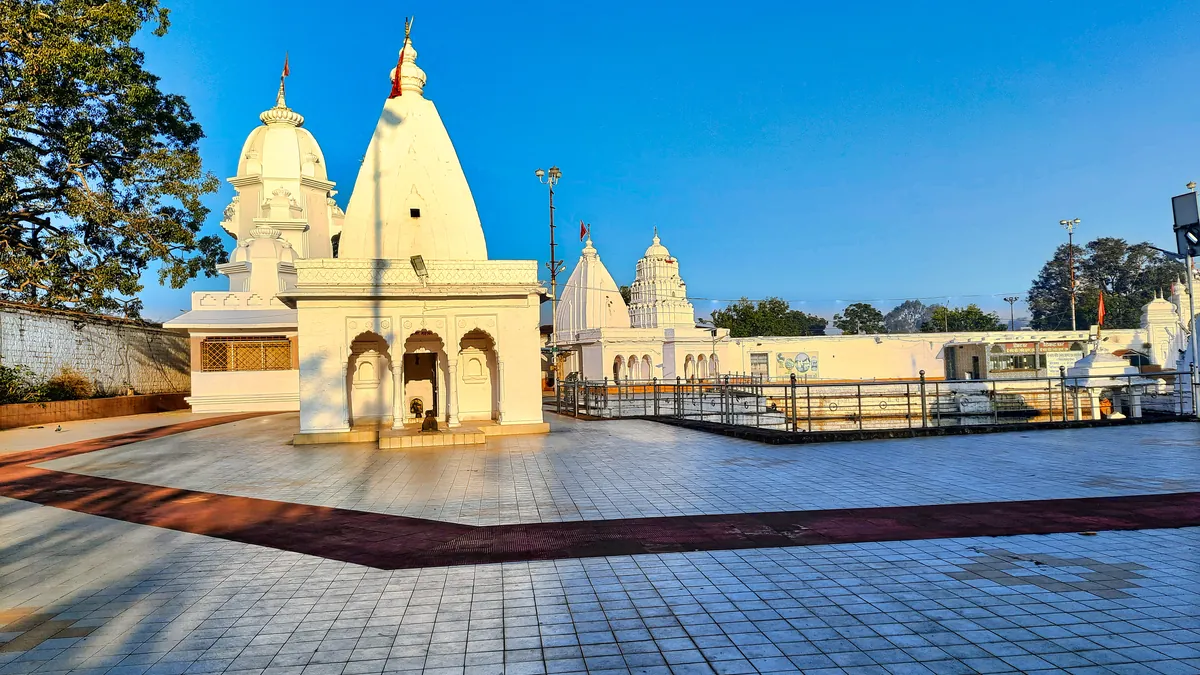
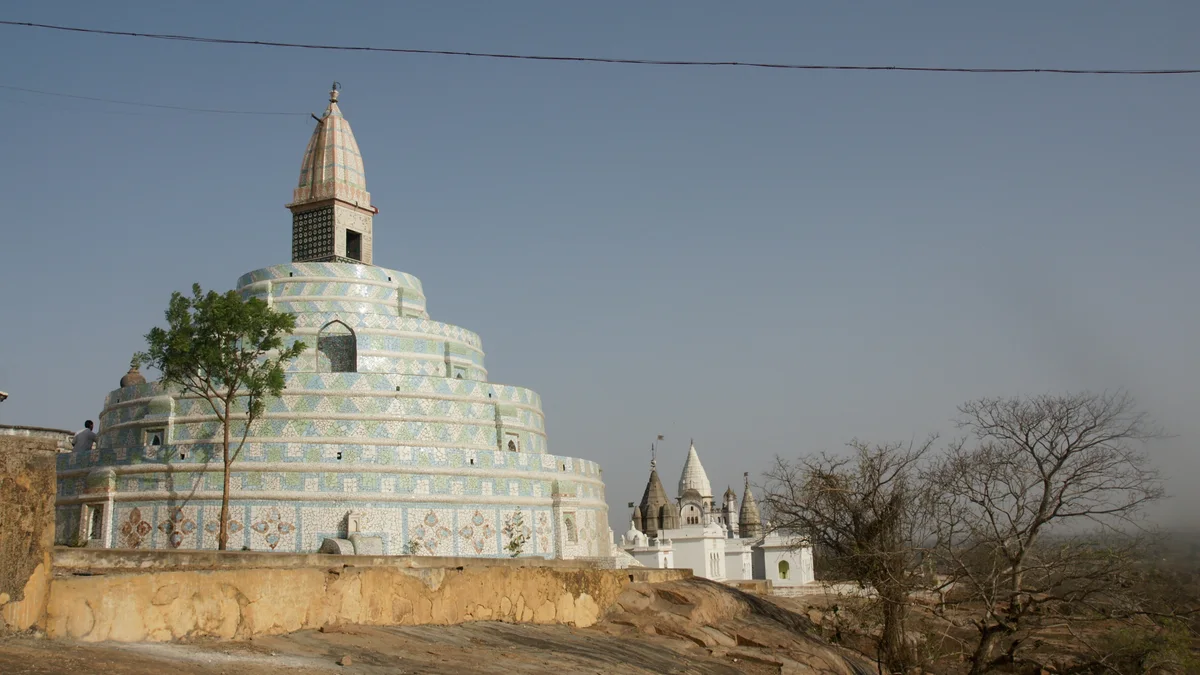
Temple no. 57. This is the main temple on the hill, with a tall artistic spire. The principal deity is an 11-ft idol of Bhagwan Chandraprabhu, known locally as Bade Baba, in the kayotsarga (standing) posture. Idols of Sheetalnath and Parshvanath stand on the two side altars. A 43-ft manastambha and a model of the Samavasarana stand in the complex.
The hill climb. The path winds past the hill temples and takes most visitors an hour or more each way, with stops. It is a long but gentle climb of several hundred steps. Start early in the morning, carry water and wear comfortable footwear for the approach. Footwear and leather items stay outside the temples.
The village temples. Twenty-six temples stand in the village at the foot of the hill, along with Jain dharamshalas that offer rooms and pure Jain food.
Festivals. Mahavir Jayanti is the main festival, and a ratha yatra is held after Holi. An annual flag-hoisting ceremony replaces the old flag on the main spire with a new golden one.
| Item | Sonagiri | Gopachal (Gwalior Fort) |
|---|---|---|
| District | Datia | Gwalior |
| Where | Two hills and a village, about 60–65 km from Gwalior | Cliffs of the Gwalior Fort hill, inside the city |
| Main images | 11-ft Chandraprabhu (Bade Baba), temple no. 57 | Urvahi standing Adinath and the separate Gopachal seated Parshvanath |
| Period | Temples from the ninth century onward | Fourteenth and fifteenth centuries, Tomar period |
| Time needed | Half a day to a full day | 1–2 hours, with the fort 3–4 hours |
| Nearest station | Sonagiri or Datia (Agra–Jhansi line) | Gwalior Junction |
| Stay | Jain dharamshalas at the village | Hotels in Gwalior city |
Figures from Wikipedia entries for Sonagiri, Gopachal and the Siddhachal caves, and from Jain Heritage Centres. Road times are approximate.
Gopachal: the Jain statues carved into Gwalior Fort
The fort hill in Gwalior was once called Gopgiri or Gopachal, and the Jain statues cut into its cliffs take that name. They were carved in the fourteenth and fifteenth centuries under the Tomar rulers and show the Tirthankaras seated and standing in meditation. The Gopachal Jain colossi are listed by the Archaeological Survey of India among its Adarsh Smarak monuments.
Urvahi (Urwahi) group. These carvings line both sides of the road that climbs to the fort's Urvahi Gate, so they are the easiest to see. The tallest image here is Adinath (Rishabhanatha), about 57 ft, identified by the bull on its pedestal. The 22 colossi in this valley are also known as the Siddhachal caves.
Ek Patthar ki Bawadi group. On the south-east side of the hill, now called Gopachal Siddha Kshetra, 26 caves run in a row for about half a mile. The main image is a 47-ft Parshvanath in lotus position, said to be the largest of its kind.
Other groups. Smaller clusters called Trishalagiri, Naminath Giri and Naimgir sit around the hill. Trishalagiri holds the oldest Jain carvings in Gwalior, dated by archaeologists to the sixth to eighth centuries.
In the sixteenth century, Babur's army defaced many of the statues at the Urvahi gate and Ek Patthar ki Bawadi. Local Jains later restored some by adding stucco heads. The groups that were hard to reach survived in better shape.
Can you see Gwalior Fort and Gopachal on the same day?
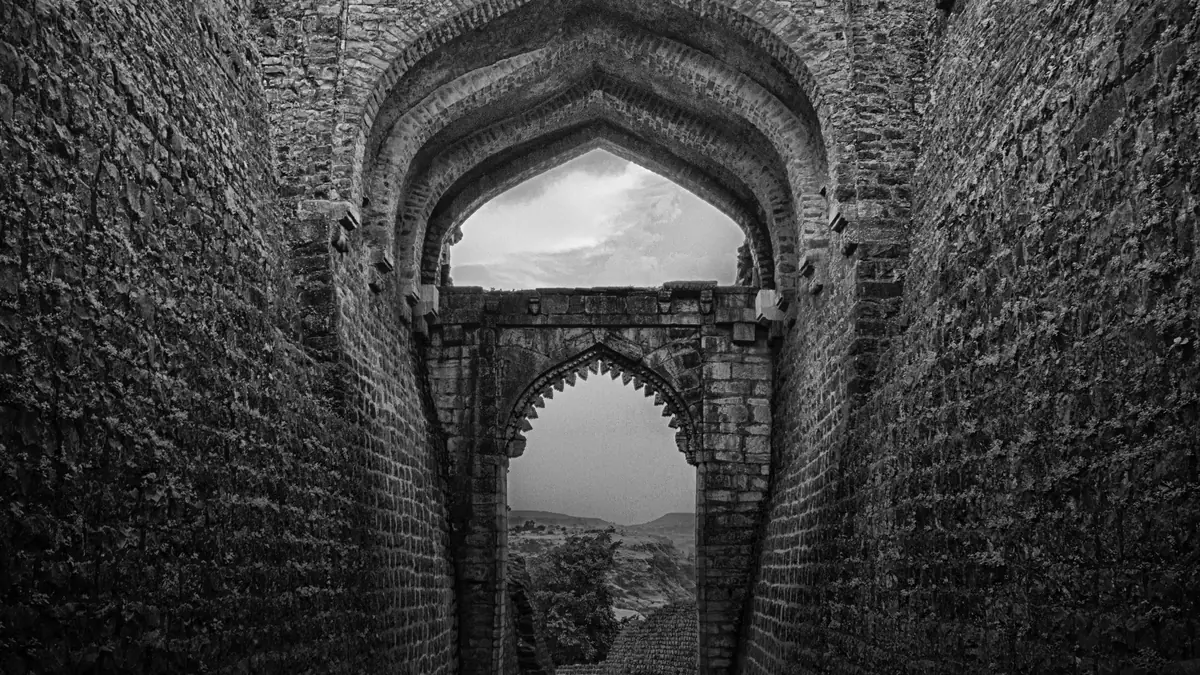
Yes, and it is the natural pairing. The Urvahi carvings are on the road up to the fort, and the Ek Patthar ki Bawadi group is a short drive around the hill. Inside the fort, visit Man Singh Palace, the ninth-century Teli ka Mandir, and the Sas-Bahu temples dedicated to Vishnu. Outlook Traveller describes the fort's principal sights. Opening hours, separate monument tickets and inclusions should be confirmed at the relevant counters.
An evening sound and light show runs at Man Singh Palace. Timings change by season, so check locally.
See the full list of Gwalior sights and temples for Jai Vilas Palace, Gujari Mahal and the Tansen tomb.
A 2-day Jain heritage plan from Gwalior
With a third night, continue to Orchha and Khajuraho. Our Khajuraho, Orchha and Gwalior 3 night tour starts from ₹11,300 per person, and we can add a Sonagiri day between Gwalior and Orchha. Khajuraho's Eastern Group has its own Jain temples, included among our Khajuraho temples and trip options.
How to reach Sonagiri and Gwalior, and where to stay
By air: Gwalior's Rajmata Vijayaraje Scindia airport serves the city. Confirm the drive to your chosen hotel, as city reference points vary. Flights are limited, so check the current schedule. By train: Gwalior Junction has daily trains from Delhi and Agra, including the Shatabdi and Taj Express. Sonagiri has its own small station on the Agra–Jhansi line, and Datia is the nearest bigger station. By road: From Gwalior, take the Gwalior–Jhansi road and turn off on the Dabra–Datia road for Sonagiri. Datia is about 75–80 km from Gwalior, so Sonagiri falls on the way to Datia, Jhansi and Orchha.
Stay in Gwalior for comfort and do Sonagiri as a day trip. Pilgrims who want to be on site can book the Jain dharamshalas at Sonagiri village directly with the temple committee. Book early in the yatra season. Browse all our Gwalior tour packages for stays from one to three nights.
Sonagiri and Gopachal yatra checklist
- Start the Sonagiri climb early in the morning. Carry water and a cap.
- Wear comfortable footwear for the approach. Footwear and leather items stay outside the temples.
- Dress modestly at both sites. Photography rules inside temples vary, so ask first.
- Tell us about Jain food needs when you book. Sonagiri's dharamshalas serve pure Jain food, and we brief Gwalior hotels in advance.
- Carry original photo ID for hotel check-in.
- Keep the Urvahi road visit for the morning light. The carvings face the road and are easiest to see then.
- Senior citizens can see the village temples and the Urvahi carvings without a long climb.
- Keep a spare hour on day two. The Sonagiri road has small towns and slow stretches.
Visiting from Jabalpur instead? Read our Kundalpur Bade Baba darshan guide. For all the main tirths in one plan, read our Jain tirth yatra in Madhya Pradesh.
Can we plan your Sonagiri and Gopachal trip?
We do not have a fixed Sonagiri package, but we plan it as an add-on to our Gwalior stays. We arrange your car from Gwalior airport or station, a hotel in Gwalior, a Sonagiri day with a driver who knows the road, and Jain food arrangements. For a longer yatra, we link Gwalior with Orchha, Khajuraho and Kundalpur. See our Khajuraho, Orchha and Gwalior tour for the heritage route.
Plan your Sonagiri and Gwalior yatra
Tell us your city, travel window, group size and food needs. We reply with a day-by-day plan and the current price.
Send us your Jain yatra request