PACHMARHI · CAVE TEMPLE OF SHIVA
Jata Shankar is a natural cave temple of Lord Shiva in a deep rocky ravine, about 1.5 km from Pachmarhi bus stand. Entry is free and it is open through the day, from about 7 am to 7 pm. You walk down about 150 steps to the cave, so keep 1 to 1.5 hours for the visit.
Hero Photo: The open draft · CC BY-SA 4.0 · cropped, resized and converted to WebP.
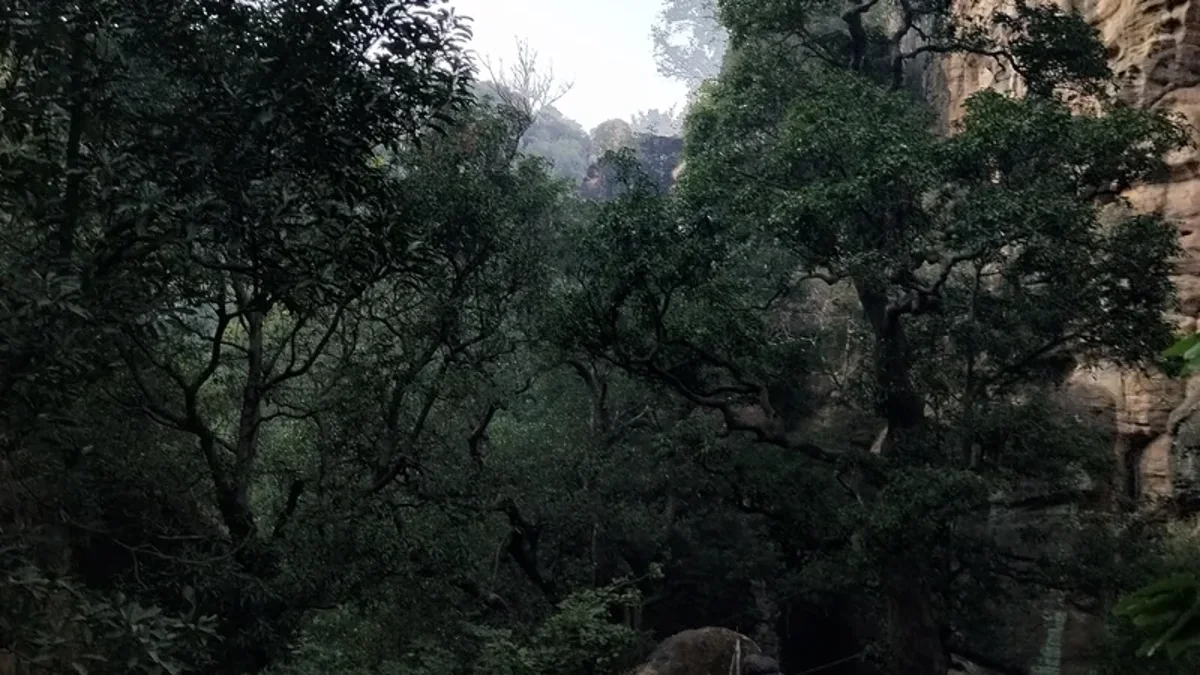
Of all the Shiva shrines of Pachmarhi, Jata Shankar is the easiest to reach and one of the most striking. Giant boulders hang over a narrow gorge, cold water drips from the roof, and the rocks inside the cave look like the matted hair, the jata, of Lord Shiva. That is how the place got its name. This guide tells you the legend, what you see inside, the walk and the best time to go. For the waterfalls and viewpoints, read our guide to the places to visit in Pachmarhi.
What is the legend of Jata Shankar?
The story begins with a demon called Bhasmasur. He prayed to Lord Shiva for years and won a terrible boon: anyone whose head he touched would turn to ash. Then he wanted to try it on Shiva himself.
Shiva ran and hid in the caves of these hills, and Jata Shankar is said to be one of his hiding places. The legend adds that he left some of his matted hair here as he passed through the rocks. In the end Lord Vishnu took the form of the beautiful Mohini and tricked Bhasmasur into touching his own head.
You will hear the same story at Gupt Mahadev, Bada Mahadev and Chauragarh. Together these shrines make Pachmarhi one of the great Shiva pilgrimages of central India.
What will you see inside Jata Shankar?
| Sight | What it is |
|---|---|
| The hanging boulders | Huge rocks wedged across the top of the gorge, above the path. The most photographed view of the place. |
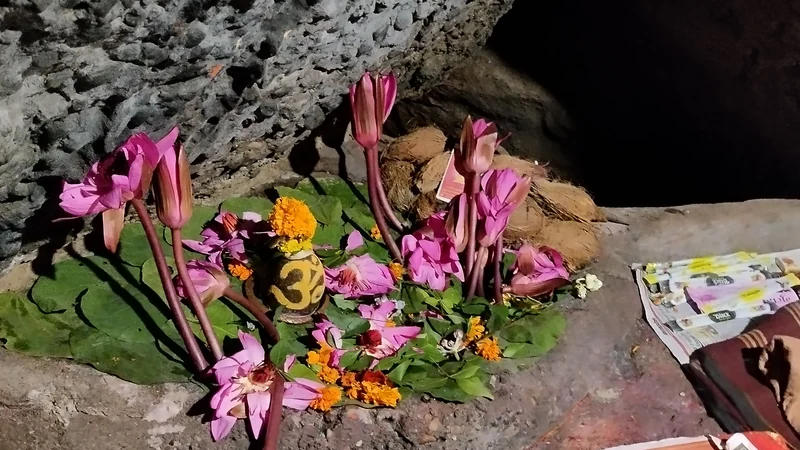
| The natural Shivlings | Rock formations inside the cave, shaped by dripping water over thousands of years, that devotees worship as Shivlings. |
| The jata rocks | Twisted strands of stone on the cave wall that look like matted hair. |
| The Sheshnag rock | Near the back of the cave, a rock shaped like the raised hood of a cobra. |
| Gupt Ganga | A stream that begins inside the cave. Nobody has found where the water comes from, so it is called the hidden Ganga. It forms a small pool beside the cave. |
| Shiva and Parvati shrine | Images of Lord Shankar and Goddess Parvati on a raised platform in the upper part of the cave. |
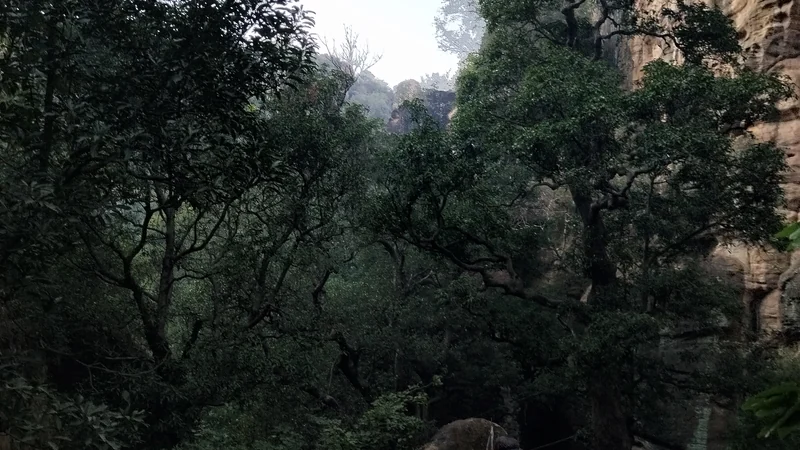
The cave is small, dark and cool even in May. You bend low at the entrance, and only a few people fit inside at a time, so there is often a short queue.
What are the Jata Shankar timings and entry fee?
| What | Details |
|---|---|
| Timings | About 7 am to 7 pm, every day |
| Entry fee | Free |
| Parking | A small fee at the car park |
| Distance | About 1.5 km from Pachmarhi bus stand |
| Time needed | 1 to 1.5 hours |
Jata Shankar is in the town area, so you do not need a forest permit or a gypsy for it. You can come by your own car, a taxi or on foot. Most other points of Pachmarhi need the permit gypsy.
How hard is the walk to Jata Shankar?
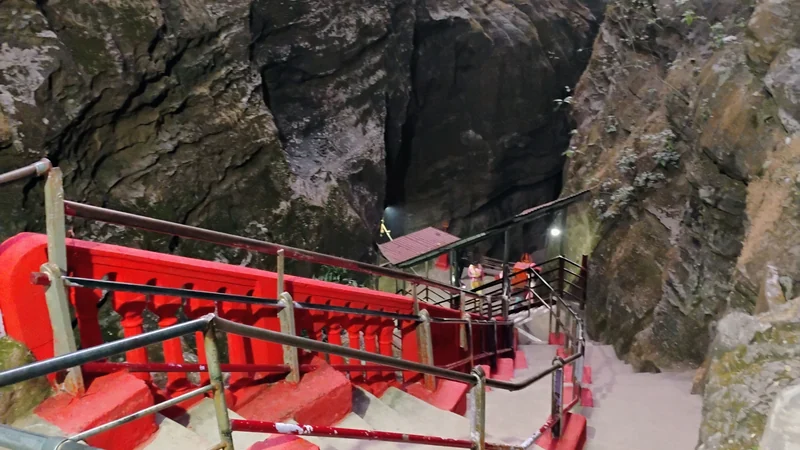
From the car park it is an easy walk of about 1 km, most of it downhill. The last part is a concrete staircase of about 150 steps that drops into the ravine, with railings on the side.
- Going down takes 10 to 15 minutes. Coming back up is slower, so rest on the way.
- The steps and the cave floor are wet all year. Wear shoes with good grip.
- Shoes come off before the cave. The rock floor is cold and uneven.
- Elders with knee trouble can come down as far as the first shrine and see the hanging boulders from there.
The path is lined with small stalls that sell forest herbs, oils and shilajit, along with tea and snacks. Fix the price before you buy.
What is the best time to visit Jata Shankar?
Go early in the morning, between 7 and 9 am. The ravine is quiet, the light comes down through the boulders, and you finish the climb before the day warms up.
- October to March is the most pleasant season for the walk.
- In the monsoon the gorge is green and full of water, but the steps are very slippery. Go slowly.
- Mahashivratri, in February or March, brings a big fair to Pachmarhi. Lakhs of pilgrims come, and Jata Shankar is packed.
- Shravan Mondays are also crowded.
- Monkeys live along the path. Keep food and plastic bags out of sight.
- Carry a small torch or use your phone light inside the cave.
Which other Shiva shrines can you see in Pachmarhi?
| Shrine | What it is | How hard |
|---|---|---|
| Jata Shankar | Cave in a ravine, in town | Easy, 150 steps |
| Bada Mahadev | A long cave with a Shivling and dripping water, about 10 km from town | Easy |
| Gupt Mahadev | A very narrow cave next to Bada Mahadev, entered sideways | Easy, but tight |
| Chauragarh | A hilltop temple at 1,330 metres, covered with tridents offered by devotees | Hard, about 1,380 steps |
Jata Shankar takes little time, so it fits well with the town points: Pandav Caves, Pachmarhi Lake, the Bison Lodge Museum and Christ Church.
Which Pachmarhi tour packages include Jata Shankar?
All our Pachmarhi tour packages include Jata Shankar in the temple tour, with Bada Mahadev, Gupt Mahadev and Handi Khoh, along with hotel, breakfast and pick-up from Pipariya station.
2 nights in Pachmarhi
Our 2 night Pachmarhi package from Pipariya has one temple tour by car and one forest tour by gypsy.
From ₹6,900 per person.
3 nights in Pachmarhi
The 3 night Pachmarhi package from Pipariya adds Dhoopgarh sunset and more time at the waterfalls.
From ₹7,900 per person.
Travelling with elders? Tell us, and we plan the temple day with the easy shrines first.
Plan your Pachmarhi trip with us
Tell us your dates, your group size and where you arrive. Our team sends you a free day-wise Pachmarhi plan with hotel options and a clear price.